
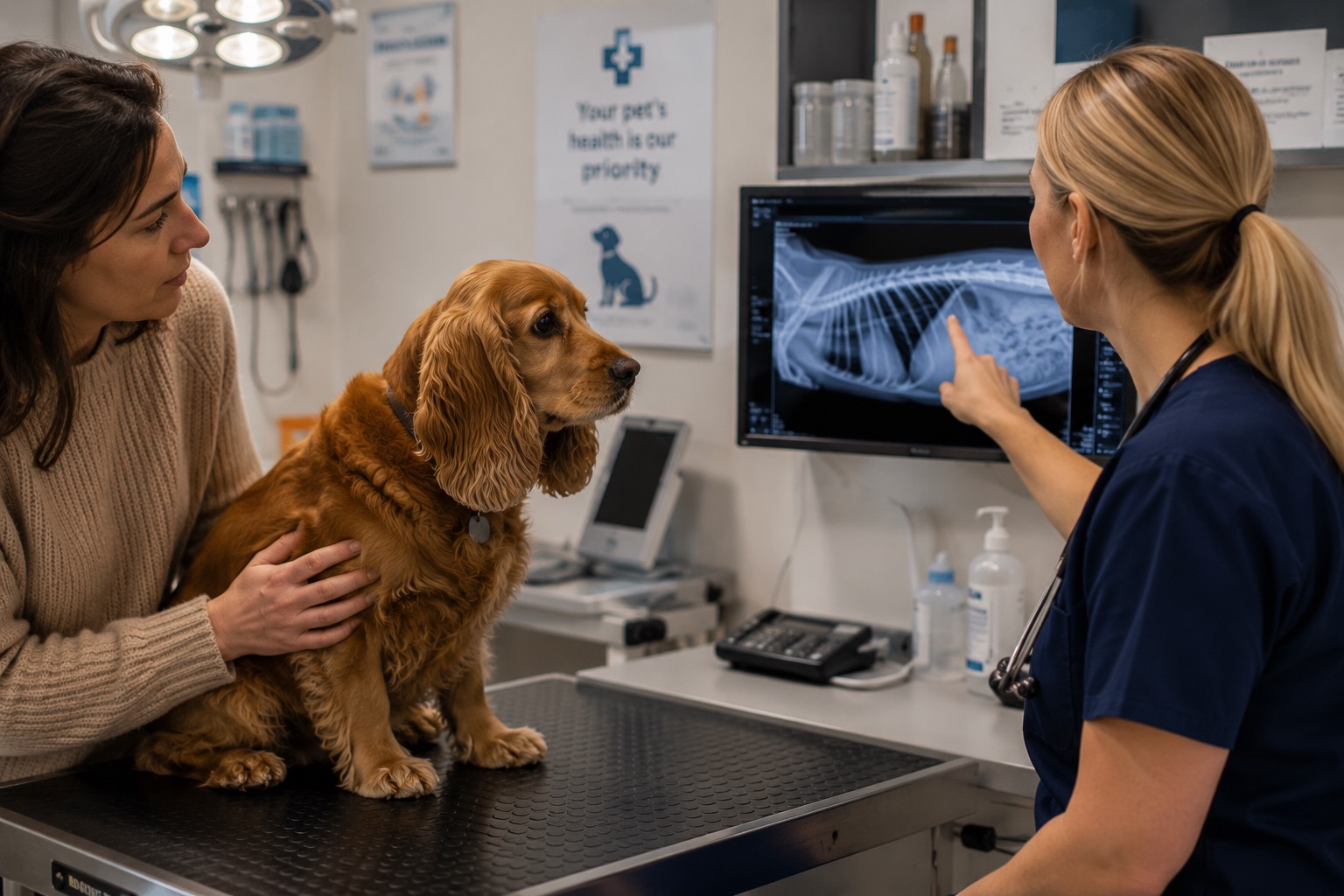
This article explains hip scoring and dog insurance in plain English, so UK pet owners can understand the question being answered before comparing policies or reading the small print.
It's a question that comes up a lot, particularly among Golden Retriever owners, and it's a genuinely good one to ask before you book that appointment.
The short answer is: it depends on what the x-ray shows, and what your current policy says.
If your dog is already insured
If you have cover in place and the hip or elbow score comes back showing a problem, that condition will now be on your dog's vet records. How that affects your current policy depends on whether that insurer treats newly diagnosed conditions as pre-existing at renewal.
Some policies will continue to cover a condition that was first identified while you were insured with them, as long as you keep renewing without gaps. Others may note it and limit future cover for anything related to it. It really does vary between policies so it's a policy detail to check your own policy wording or calling your insurer to ask directly before you go ahead with the scoring.
What it almost certainly won't do is affect your current policy mid-term. Insurers can't generally change your terms during an active policy year.
If you're thinking of switching insurers
This is where it gets more important. Once a condition is on your dog's records, any new insurer you go to will treat it as pre-existing. That means hip or elbow dysplasia, or anything related to it, is likely to be excluded from a new policy.
So if you're planning to switch at renewal, getting a hip score done beforehand could affect your options. If the score comes back clear, no problem. If it doesn't, you may find yourself staying with your current insurer because switching means losing cover for that condition.
"Once a condition is on your dog's records, any new insurer will treat it as pre-existing."
If your dog isn't insured yet
If you haven't taken out insurance yet and you're thinking of getting a hip score done first, just be aware that the results will go onto your dog's vet records. If there's anything flagged, it could be excluded from any policy you then take out.
This doesn't mean don't do it. Hip and elbow scoring is genuinely useful health information, especially for breeds that are prone to joint problems. But it's worth getting insurance in place before the results are on record if you can, so the condition has the best chance of being covered if it develops later.
The main thing to take away
Routine scoring that comes back clear is unlikely to cause any problems at all. The complications only tend to arise when something is actually found. Talk to your current insurer if you're unsure, and read your renewal documents carefully before switching to anyone new.
This article is for general information only and does not constitute advice of any kind.