
This news update explains why vet bills keep rising and what it means for UK pet owners trying to understand pet insurance, vet costs or animal welfare issues.
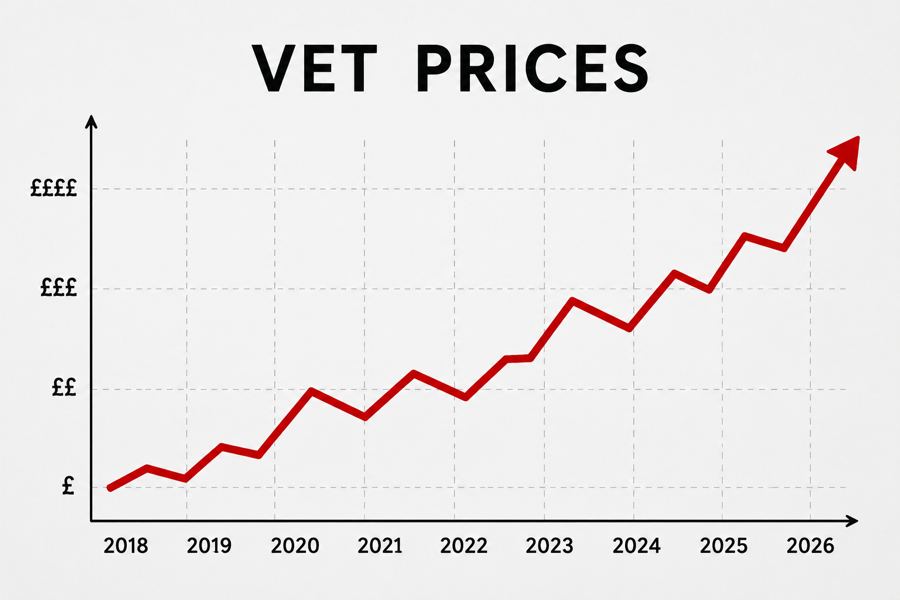
If it feels like your vet bills are higher than they used to be, that's because they are. Veterinary fees in the UK have risen by around 60% over the past eight years, and costs have continued to climb into 2026. There are several reasons for this, and understanding them is useful context for anyone thinking about pet insurance.
Corporate consolidation
One of the biggest structural changes in UK veterinary care over the past decade has been the consolidation of practices under large corporate groups. Large business groups now own well over half of all UK veterinary practices, having bought up many of the independent surgeries that previously competed with each other locally.
When local competition reduces, pricing tends to standardise at a higher level. Average daytime consultation fees now typically sit between £60 and £80, and the CMA, which has been investigating the sector, found that market issues could be costing UK households around £1 billion over five years if left unaddressed.
Staffing costs
Veterinary care is highly labour-intensive. Training a vet takes five or more years, and the profession has faced significant staffing pressures since Brexit reduced the pool of EU-qualified vets working in the UK. Salaries for qualified veterinarians and veterinary nurses have risen substantially as practices compete for staff, and those costs are reflected in the bills pet owners receive.
Advanced technology and treatments
Modern veterinary care can do things that simply weren't possible a generation ago. MRI scans, specialist oncology, orthopaedic surgery, advanced diagnostics, all of these have improved outcomes for pets significantly. But the equipment is expensive, the specialists are expensive, and the treatments themselves cost more as a result.
A full X-ray series now costs around £300 on average. Complex surgeries can run from £1,000 to several thousand pounds depending on the procedure. For conditions requiring ongoing treatment, the cumulative cost over months or years can be very significant.
"Veterinary fees in the UK have risen by around 60% over the past eight years, and costs have continued to climb into 2026."
What this means for insurance
Rising vet costs feed directly into the cost of pet insurance. When claims cost more, premiums tend to follow. This is one of the main reasons pet insurance premiums have been rising over recent years, and it's also why the type of cover you hold matters more than it used to. A policy with a low annual limit may have been adequate a few years ago but fall short now if treatment costs have risen significantly since the policy was set up.
It's also worth noting that vet fee inflation affects all policy types, but lifetime cover with a generous annual limit that resets each year provides better protection against ongoing rising costs than time-limited or lower-limit policies.
This article is for general information only and does not constitute advice of any kind.