
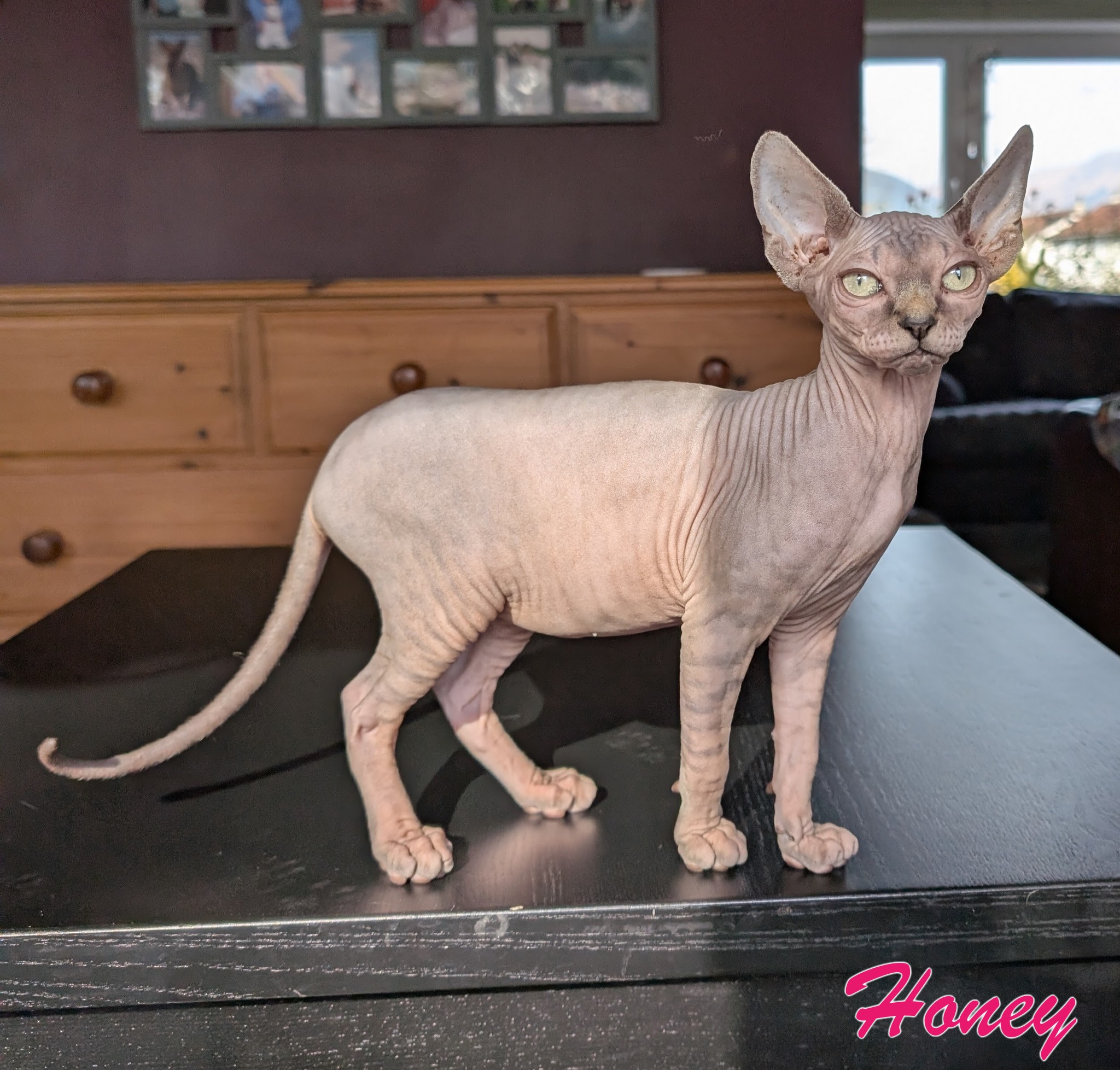
What is a Sphynx like?
Sphynx cats are extroverts. They are warm, affectionate, playful and deeply invested in the company of their people — and anyone else who happens to come through the door. They are not independent cats who will happily entertain themselves; they want to be involved, they want contact and they will seek out body heat with impressive determination, frequently burrowing under blankets or draping themselves over the nearest warm human at every opportunity. They are often described as part cat, part dog, part monkey — an assessment that most Sphynx owners find entirely accurate.
The breed was developed following a natural mutation that produced a hairless kitten in Canada in 1966. Selective breeding from that point produced the modern Sphynx, which arrived in the UK and has been gaining in popularity ever since. Despite their striking appearance, they are fully domestic cats with no wild ancestry, and their personality is very much that of an extremely social, energetic and affectionate companion. They are not, despite what their regal expression might suggest, aloof — quite the opposite.
Sphynx temperament
Sphynx cats are among the most sociable of all pedigree breeds and do not cope well with solitude. They are best suited to households where someone is home for most of the day, or where they have a companion animal for company. They are generally excellent with children, other cats and even dogs, and their extrovert nature means they rarely retreat when visitors arrive. They are vocal without being incessant, and they communicate enthusiastically through chirps, trills and the occasional loud demand. They are not a breed for anyone who wants a cat that is happy being ignored.
Sphynx care needs
- Despite having no fur to brush, Sphynx cats need weekly bathing to remove the build-up of body oils that would normally be absorbed by a coat.
- Their large ears accumulate wax and debris quickly and should be cleaned gently at least once a week.
- They are indoor-only cats and cannot be allowed outdoors unsupervised — they have no coat protection against sun, cold or injury.
- They need warmth, and most Sphynx owners provide heated cat beds, radiator hammocks and plenty of blankets for their cat to burrow into.
- Sun protection is needed for any brief outdoor time, as their exposed skin can burn — a vet can advise on appropriate products.
- Regular cardiac screening is something many Sphynx owners choose to pursue given the breed's elevated HCM risk.
Sphynx size and lifespan
Sphynx cats are a medium-sized breed with a solid, muscular build that is more apparent in the absence of fur than it might be in a coated cat. Males typically weigh between 4kg and 5.5kg, while females are generally between 3kg and 4kg. They have a distinctive barrel-shaped torso, long legs and a whippy tail. Life expectancy is generally between 9 and 15 years, though HCM can significantly affect lifespan in severely affected individuals. Many healthy Sphynx cats reach their early-to-mid teens without major problems.
Sphynx exercise and activity
Sphynx cats are high-energy and need plenty of daily activity and interaction. They love to play, climb, chase and investigate, and they are particularly fond of interactive games with their owners. Cat trees, tunnels, wand toys and puzzle feeders all help channel their energy constructively. Because they cannot go outdoors safely, their entire physical and mental world is the home environment, which means enrichment needs to be thought about carefully and maintained consistently. A Sphynx left without adequate stimulation will find its own entertainment, and their intelligence and dexterity means they are rather good at getting into things they shouldn't.
Coat and grooming
The Sphynx's lack of coat is the thing most people assume makes them low-maintenance, and in terms of brushing they certainly are. But the absence of fur creates its own grooming needs. Without a coat to absorb them, the skin's natural oils accumulate on the surface and need to be removed through regular bathing — most Sphynx owners bathe their cat once a week using a gentle, cat-safe shampoo. Between baths, the skin can be wiped over with a damp cloth to manage oil build-up in the skin folds and creases around the face, neck and legs. The ears need weekly cleaning as wax accumulates rapidly in the large, open ear canal. Nail sheaths also need checking regularly as they can build up debris. It is fair to say that Sphynx ownership involves more grooming time than most coated breeds, just of a very different kind.
Temperament and training
Sphynx cats are intelligent, curious and highly motivated by interaction with their owners, which makes them very receptive to training. They learn quickly and enjoy the engagement of training sessions, responding well to positive reinforcement with food and praise. Many Sphynx cats can learn tricks, recall commands and even fetch with a little patient work. Their sociability means they are rarely nervous or defensive during training, and their outgoing nature makes them resilient to new experiences when introduced thoughtfully. They suit owners who want an active, engaged companion and are willing to invest time in play and interaction every day.
Is a Sphynx right for me?
A Sphynx is a wonderful cat for the right owner — someone who is home regularly, who enjoys an intensely social and interactive companion and who is prepared for the specific care routine the breed requires. The weekly bath alone is not something everyone is comfortable with, and the ongoing warmth needs of a hairless cat mean heating costs and specialist bedding are real considerations. Vet costs can be significant given the breed's cardiac risks, and insurance deserves careful attention — particularly around HCM — before you commit to a policy. For the right household, a Sphynx is an unforgettable, deeply rewarding companion.
Browse cat guides | Shorthaired breed guides | Compare pet insurance
For more context before comparing cat cover, read our guide to pet insurance policy types and the jargon buster on pre-existing conditions.