
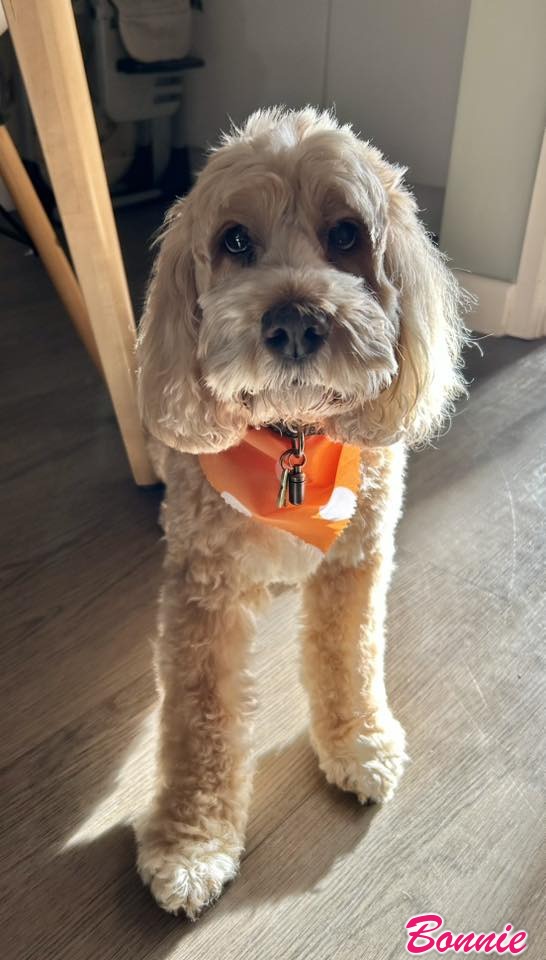
What is a Cockerpoo like?
Cockerpoos are usually affectionate, lively and people-focused dogs that enjoy being part of family life. Many inherit the Cocker Spaniel's cheerful energy alongside the Poodle's intelligence, which can make them fun, trainable and very attached to their owners.
Because they are crossbreeds, Cockerpoos can vary in size, coat and temperament. Some are calm little companions, while others are busy, bouncy and need plenty of exercise and training to stay settled.
Cockerpoo temperament
Cockerpoos are often friendly, eager and responsive to reward-based training. They usually enjoy company and can be sensitive, so calm routines, early socialisation and gentle consistency help them feel confident.
Cockerpoo care needs
- Cockerpoos usually need daily walks, play and mental stimulation.
- Curly or fleece-type coats can mat quickly without regular brushing.
- Many enjoy training games, scent work and gentle retrieval activities.
- Ear checks are important because floppy ears can trap moisture and wax.
- Some Cockerpoos can become anxious if left alone too much.
- Professional grooming is often needed every few weeks to keep the coat manageable.
Cockerpoo size and lifespan
Male Cockerpoos are usually around 35cm to 43cm tall and often weigh between 8kg and 15kg. Females are commonly around 33cm to 40cm tall and often weigh between 7kg and 13kg, though there can be a lot of variation depending on the Poodle parent. Average lifespan is generally around 12 to 15 years.
Cockerpoo exercise needs
Cockerpoos are active little dogs that normally enjoy walks, games, sniffing time and training sessions. Most adults benefit from a good daily routine rather than one quick walk. Puppies should avoid long repetitive walks, too much stair use and excessive jumping while growing, and the five-minute puppy exercise rule can be used as a rough guide. Brain work is often just as useful as physical exercise for this clever crossbreed.
Coat and grooming
Cockerpoo coats can range from loose waves to tight curls, and grooming needs are often higher than new owners expect. Shedding may be lower than some breeds, but that does not mean the coat looks after itself. Regular brushing is usually needed several times per week, with professional grooming often every six to eight weeks. Ears, eyes, paws and skin should be checked regularly, especially after muddy walks.
Temperament and training
Cockerpoos are often clever and eager to learn, especially when training is positive and fun. Food, praise and play can all motivate them, although some become over-excited or distracted if they have not learnt calm routines. They may bark, jump up or become clingy if under-stimulated. They suit owners who want an affectionate, interactive dog and are ready for grooming as well as training.
Is a Cockerpoo right for me?
A Cockerpoo may suit you if you want a sociable, affectionate dog and can provide daily exercise, grooming and company. They are less suited to homes where they would be left alone for long hours without support. Grooming costs, routine vet care, training and insurance considerations are all worth thinking about before bringing one home.
Browse dog guidesCross Breeds & Non Pedigree Dogs breed guidesCompare pet insurance
For more context before comparing cover, read our guide to hip scoring and dog insurance and the jargon buster on bilateral conditions.