
This news update explains retired police dog vet bills and what it means for UK pet owners trying to understand pet insurance, vet costs or animal welfare issues.
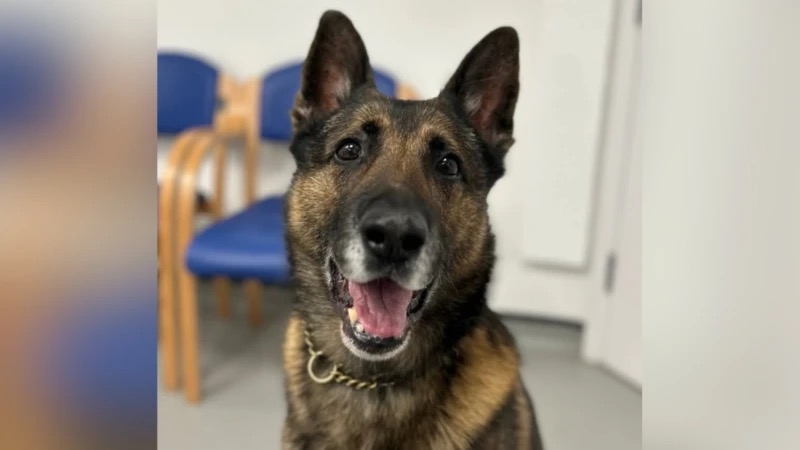
Quantum is a ten year old German Shepherd who spent six years with Nottinghamshire Police, racked up over 250 arrests, won a national bravery award after being stabbed by a machete-wielding suspect, was hit round the head with a plank of wood at Nottingham railway station while still refusing to let go of the man he was detaining, and retired in 2022 described by his handler as "dependable, loyal, reliable and absolutely fearless."
He now has dental problems, joint pain and mobility issues believed to be linked to his years of service. His vet bills have reached around £10,000. And the official position of the state that put him to work is that his costs are nothing to do with them.
That's the situation that charity Hero Paws is trying to draw attention to, and its a story that touches on something a lot of people don't realise about working dogs until they're already dealing with the consequences.
What happens when a police dog retires
According to national police guidance, once a retired police dog is handed over to a new owner, whether that's their former handler or a member of the public, responsibility for their welfare and costs transfers completely. There is no ongoing support from the force, no pension, no contribution to vet bills.
Quantum's handler Jen Ellse adopted him when he retired, which is the most common outcome. She's been supported by Hero Paws and the charity Thin Blue Paw in managing his bills, but both charities are clear that public funding shouldn't be the answer. They're calling for a proper government-backed support system for retired service animals.
Hero Paws founder Jaime Garner, who is also an army veteran, put it plainly. "Police dogs don't actually get any support post service. Once the handler signs over as the guardian, that's it. We still class them as a piece of equipment in some cases. I don't think any human or animal veteran should need charity help, the support should automatically be there."
"I don't think any human or animal veteran should need charity help, the support should automatically be there."
The insurance problem
On top of the cost issue there's an insurance problem too. Thin Blue Paw estimates that taking on a retired police dog costs an average of £3,000 more per year than taking on an equivalent dog of the same breed and age, partly because of their complex medical histories and partly because insurance can be genuinely difficult to find for them.
This won't surprise anyone who understands how pet insurance works. Pre-existing conditions are excluded from most standard policies, and a dog with years of physical police work behind them, possible dental damage, joint stress and documented injuries, is not an easy animal to insure comprehensively. The conditions that developed during service are exactly the ones most likely to need treatment in retirement, and exactly the ones most likely to be excluded.
A police dog pension scheme was set up in Nottinghamshire in 2013 but is no longer running. The Home Office has said each force makes its own policies and there are no plans to change the retirement process nationally.
Why this matters beyond Quantum
Around 50 to 70 police dogs retire every year across the UK. Most go to their former handlers, some to approved members of the public. They tend to arrive with more complex health needs than the average rescue dog, and without any financial safety net attached.
Thin Blue Paw's founder Kieran Stanbridge said what a lot of people are thinking. "After a lifetime of service to communities across the UK, police dogs like Quantum are not afforded a pension in retirement. The cost of their veterinary care falls entirely to their former handler or to the members of the public who give these heroes a loving home. We are calling on the government to provide lifelong care in the form of a pension, ensuring these brave dogs are properly supported by the very government that asked so much of them throughout their service."
Its hard to argue with that. A dog that took a machete strike and kept working probably deserves better than a whip-round.
If you want to support Quantum and Hero Paws you can find them through their website. Thin Blue Paw also does vital work supporting retired police dogs and their owners across the UK.
This article is for general information only and does not constitute advice of any kind.