
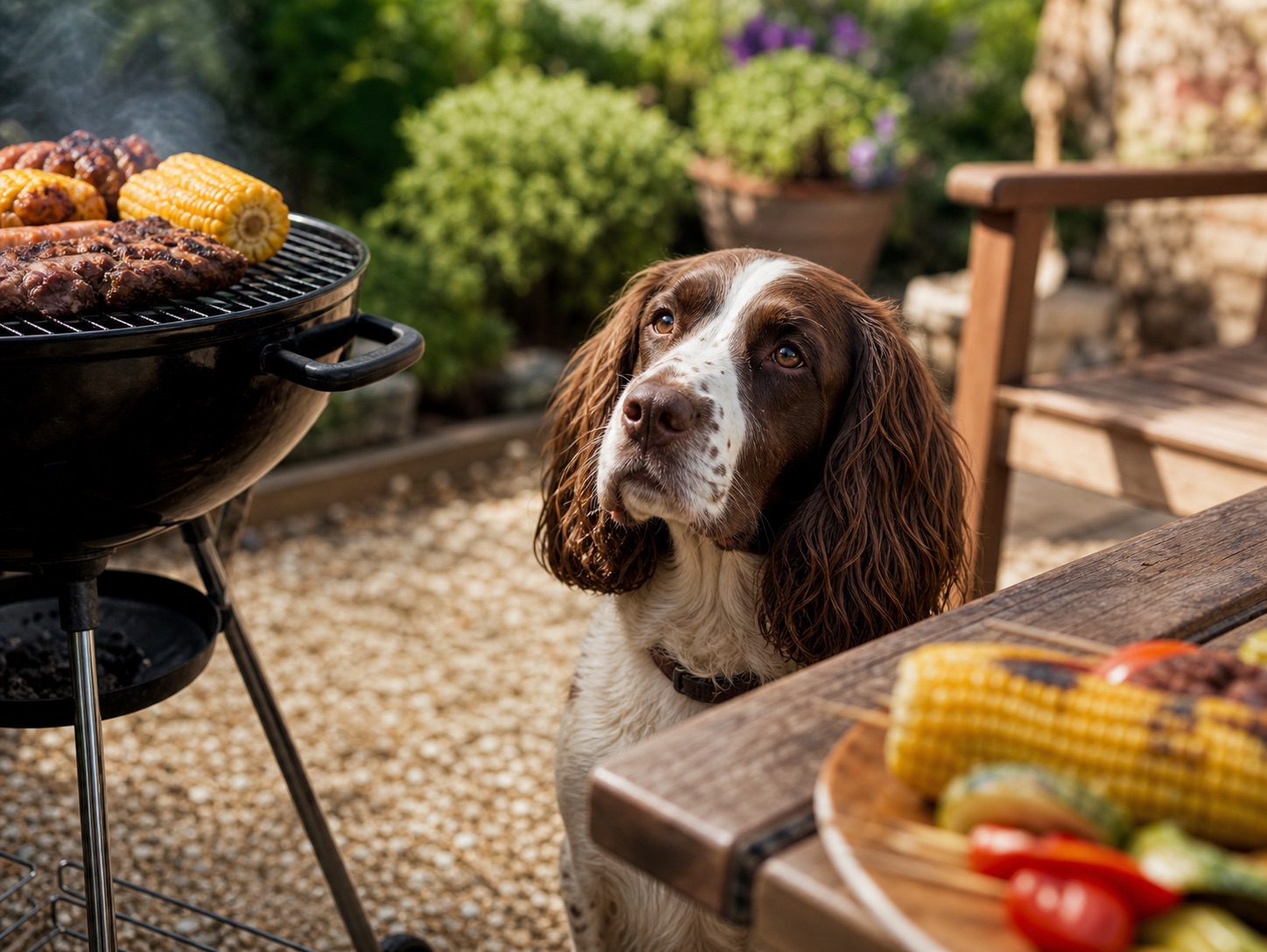
With BBQ season in full swing, here's a story worth five minutes of your time before you fire up the grill this weekend.
Alicia Atkinson from Harrogate had a family barbecue that ended up costing her £5,000 in vet bills, all because her two dogs got into the bin and helped themselves to the leftover corn on the cob cores.
Her cocker spaniel Ted, six, and springer spaniel Milly, eight, managed to swipe the nibbled cobs before she realised what had happened. She took both dogs straight to the vet, paid £500 for medication to make them bring the food back up, and thought that was the end of it.
Four weeks later, Ted stopped eating. An ultrasound showed a blockage in his gut, and he needed emergency surgery to remove a piece of corn cob that had been sitting inside him the whole time.
"The vet said it was a miracle he had it in there for four weeks," Alicia said. "In smaller dogs, this would have been fatal."
The surgery cost £4,500. Her insurance covered £2,000 of it, leaving her £2,500 out of pocket, on top of the initial £500. All from a pack of corn that cost £1.29.
Ted has made a full recovery, Alicia has fitted child locks on her bins, and corn on the cob has been permanently banned from the house.
Why is corn on the cob so dangerous for dogs?
Unlike a lot of foods that are bad for dogs, corn on the cob isn't toxic exactly, it's a physical hazard. Dogs can't digest the cob itself, and because of its shape and size it doesn't pass through the gut the way other things might. Instead it can lodge itself and cause a blockage, and if that blockage isn't treated, the pressure it builds up can cause the intestines to rupture, which is life-threatening.
The particularly tricky thing, as Ted's case shows, is that symptoms don't always appear immediately. A dog might seem fine for days or even weeks before things start to go wrong, which means owners don't always connect the dots back to what their dog ate.
Other BBQ foods to keep away from dogs
While you're thinking about it, corn on the cob isn't the only thing to watch at a barbecue. Cooked chicken bones can splinter and cause internal injuries. Onions and garlic are toxic to dogs even in small amounts. Avocado is dangerous, as is anything containing xylitol, which turns up in some sauces and marinades. Grapes and raisins, which sometimes appear in salads or desserts, can cause kidney failure even in very small quantities.
The simplest rule is that anything coming off the grill, and anything going in the bin, should be kept well out of reach. Bin it outside straight away if you can, and if your dog is the type to investigate, make sure the bin itself isn't accessible.
What to do if your dog eats something risky
If you think your dog has eaten something they shouldn't have, call your vet straight away rather than waiting to see if symptoms develop. As Ted's story shows, by the time symptoms appear, the situation can already be serious.
It is also worth checking what your pet insurance policy covers in terms of ingestion and obstruction emergencies. Most comprehensive policies will cover emergency surgery of this kind, but it is always worth knowing your limits and your excess before something like this happens rather than after.
This article is for general information only and does not constitute veterinary advice. If your dog has eaten corn on the cob or anything else concerning, contact your vet immediately.